What's Hot in 2025 Home Design
1. Warm, Earthy Color Palettes
Neutral tones are still strong, but in 2025, we saw a shift towards warmer, earthier colors like terracotta, olive green, mustard, and sandy beige. These hues create cozy, welcoming environments that promote relaxation and well-being.
Key Tip: Incorporate warm tones through accent walls, textiles, and accessories to instantly refresh your space.
2. Sustainable and Eco-Friendly Materials
Sustainability is no longer a niche concept—it’s mainstream. Homeowners are choosing natural, eco-conscious materials such as reclaimed wood, recycled metal, bamboo, and organic fabrics. Certifications like FSC (Forest Stewardship Council) and GREENGUARD have become essential indicators of material quality and responsibility.
Key Tip: Look for furniture and decor pieces that are responsibly sourced or made from recycled materials to combine style with environmental stewardship.
3. Curved and Organic Shapes
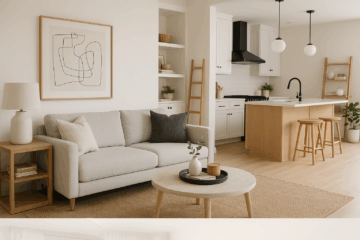
Gone are the days of sharp lines and hard angles dominating interiors. 2025 welcomes curved sofas, round tables, and organically shaped lighting fixtures, offering a softer, more inviting atmosphere. These forms not only look luxurious but also encourage a sense of flow and movement in the home.
Key Tip: Introduce curves through statement pieces like rounded coffee tables, soft-edge mirrors, or plush, arched headboards.
4. Multifunctional Spaces
The need for multifunctional spaces is more significant than ever. Homes are being designed with flexibility in mind, featuring offices that can transform into guest rooms, kitchens that function as social hubs, and living rooms with modular furniture.
Key Tip: Invest in convertible furniture, sliding partitions, and hidden storage to maximize versatility without sacrificing style.
5. Statement Lighting
Lighting has taken center stage as a primary design element rather than a mere utility. Bold chandeliers, oversized floor lamps, and artistic pendant lights act as focal points, adding drama and personality to interiors.
Key Tip: Choose lighting fixtures that reflect your personal style and aren’t afraid to stand out.
What's Not in 2025 Home Design
1. Overly Minimalist Interiors
While minimalism has its appeal, the ultra-sparse, stark white interiors are on the decline. In 2025, people are craving more personalized, layered, and lived-in spaces that feel authentic rather than sterile.
What to Avoid: Rooms that feel cold, empty, and overly curated. Instead, add warmth through textiles, color, and meaningful decor.
2. Fast Furniture
Disposable, cheaply made furniture is losing favor as homeowners prioritize durability and craftsmanship. There’s a growing emphasis on investment pieces that offer longevity, both in style and function.
What to Avoid: Mass-produced items with a short life span. Opt for heirloom-quality pieces even if it means acquiring them more slowly
tur adipiscing elit. Ut elit tellus, luctus nec ullamcorper mattis, pulvinar dapibus leo.
3. Open-Concept Everything
The open-concept layout, once the gold standard, is now being reconsidered. Many are opting for defined spaces that provide privacy and purpose, especially with more people working and studying from home.
What to Avoid: Completely removing walls without considering noise control and functionality. Instead, create subtle divisions that enhance usability.
4. Matching Furniture Sets
In 2025, the “matchy-matchy” approach is viewed as outdated. People are gravitating towards eclectic, collected-over-time aesthetics that mix styles, eras, and materials.
What to Avoid: Buying an entire matching living room or bedroom set. Layer different textures and pieces for a more authentic look.
5. Faux Finishes
Artificial materials and fake finishes are on the outs. Homeowners now prefer the authentic character of real wood, stone, and natural fibers.
What to Avoid: Vinyl that mimics wood or countertops pretending to be marble. Instead, invest in genuine materials that age gracefully.
Final Thoughts
The 2025 home design landscape is about authenticity, comfort, and conscious living. By embracing these evolving trends and avoiding outdated practices, we can create homes that are not only stylish but also nurturing and sustainable for years to come.
0 Comments